 Garage Doors Green EZ Services
Garage doors don't need much, but they do need some attention. Door and opener makers all publish care schedules, and they line up well with how the seasons run around Greenville.
Here's a simple yearly plan: what you can do yourself, how often, and what's better left to a technician.
What Upstate weather does to a door
- Pine pollen. Clemson's Home & Garden Information Center says the yellow-green coating on cars and outdoor surfaces in South Carolina comes from pines, from late March through April. It settles on door panels, tracks and sensor lenses too.
- Summer heat. The normal July high at Greenville-Spartanburg is 90.3°F (NWS, 1991–2020 normals). Weatherstripping and the bottom seal take the brunt of it.
- Winter cold. The normal January low is 32.1°F, and freezing mornings are tough on springs that are already near the end.
- Humid air. Bare steel parts like springs, hinges and fasteners are the ones to watch for rust.
How often to check your door
The manufacturers don't all use the same schedule, but they agree on the basics:
| Source | Recommended schedule |
|---|---|
| DASMA | Monthly safety checks, plus a yearly visit from a trained door technician |
| Clopay | Review the door at least once a year, as often as every three months; lubricate once a year |
| Amarr | A routine check twice a year; wash the exterior once a year |
| CPSC | Test the opener's reversing feature monthly |
A season-by-season checklist
Spring (after the pollen)
- Wash the door. Amarr suggests about one cup of household detergent in five gallons of warm water and a soft sponge or cloth. Don't pressure wash, and never mix cleaners with bleach.
- Wipe the safety sensor lenses with a soft cloth.
- Brush pollen and grit out of the tracks. Don't grease the tracks.
Summer
- Look over the bottom seal and side weatherstripping for cracks or flattened spots. Clopay suggests running a hand along the bottom of the closed door to feel for gaps.
- Watch the door through a full cycle. It should move smoothly without jerking or scraping.
Fall
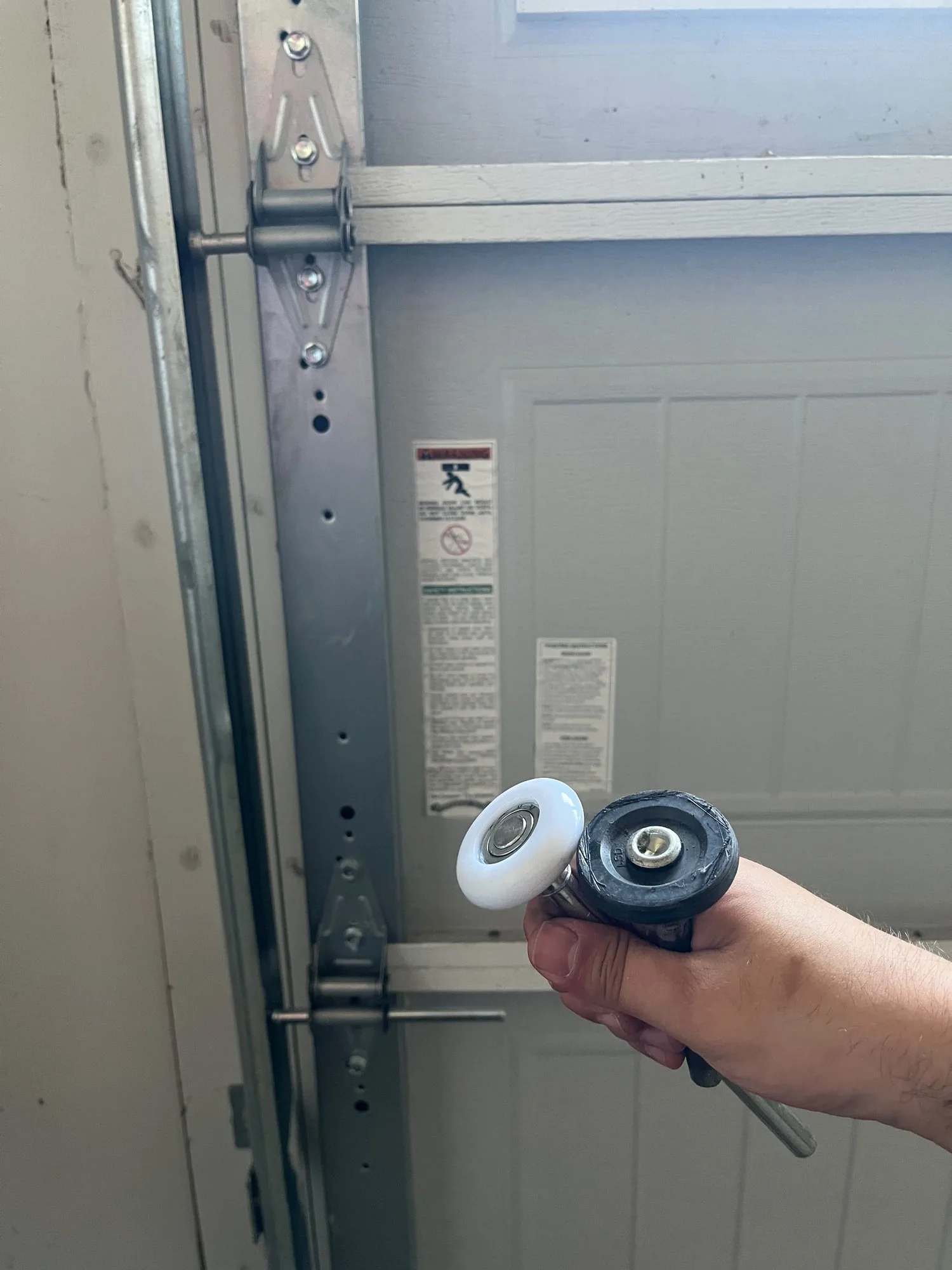
- Lubricate moving parts once a year. Clopay lists hinges, rollers (except nylon), bearings, torsion springs and the lift cables at the bottom corners, and says to use a silicone-based lubricant, not grease.
- Amarr says not to lubricate plastic parts such as plastic rollers and idler bearings.
- Check the paint or finish for peeling or fading.
Winter
- Run the balance test below before the coldest weeks.
- Listen for new noises on cold mornings. A spring that sounds different is worth a look.
Two tests to run every month
Balance test
- Close the door, then pull the opener's release cord so you can move the door by hand.
- Lift the door to about halfway and let go.
- Clopay says a balanced door stays open halfway. If it drifts up or falls, the springs need adjusting by a professional.
If the door fails the balance test, leave the springs alone. Adjusting them is a job for a trained technician.
Reverse test
Lay a 2x4 flat in the middle of the opening and close the door. It should reverse when it touches the board. Then pass a broom through the sensor beam while the door is closing; it should reverse again.
Signs it's time for a technician
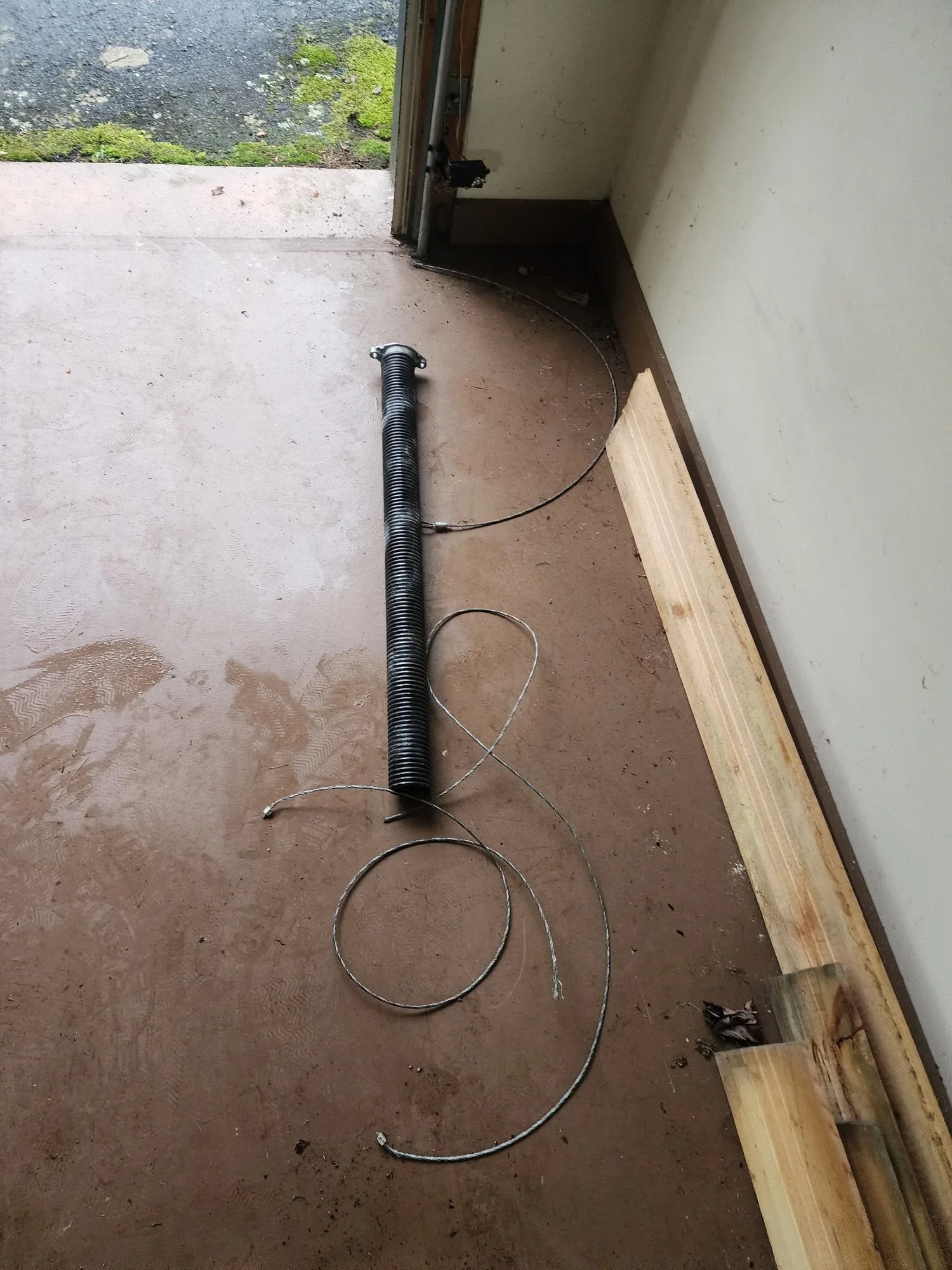
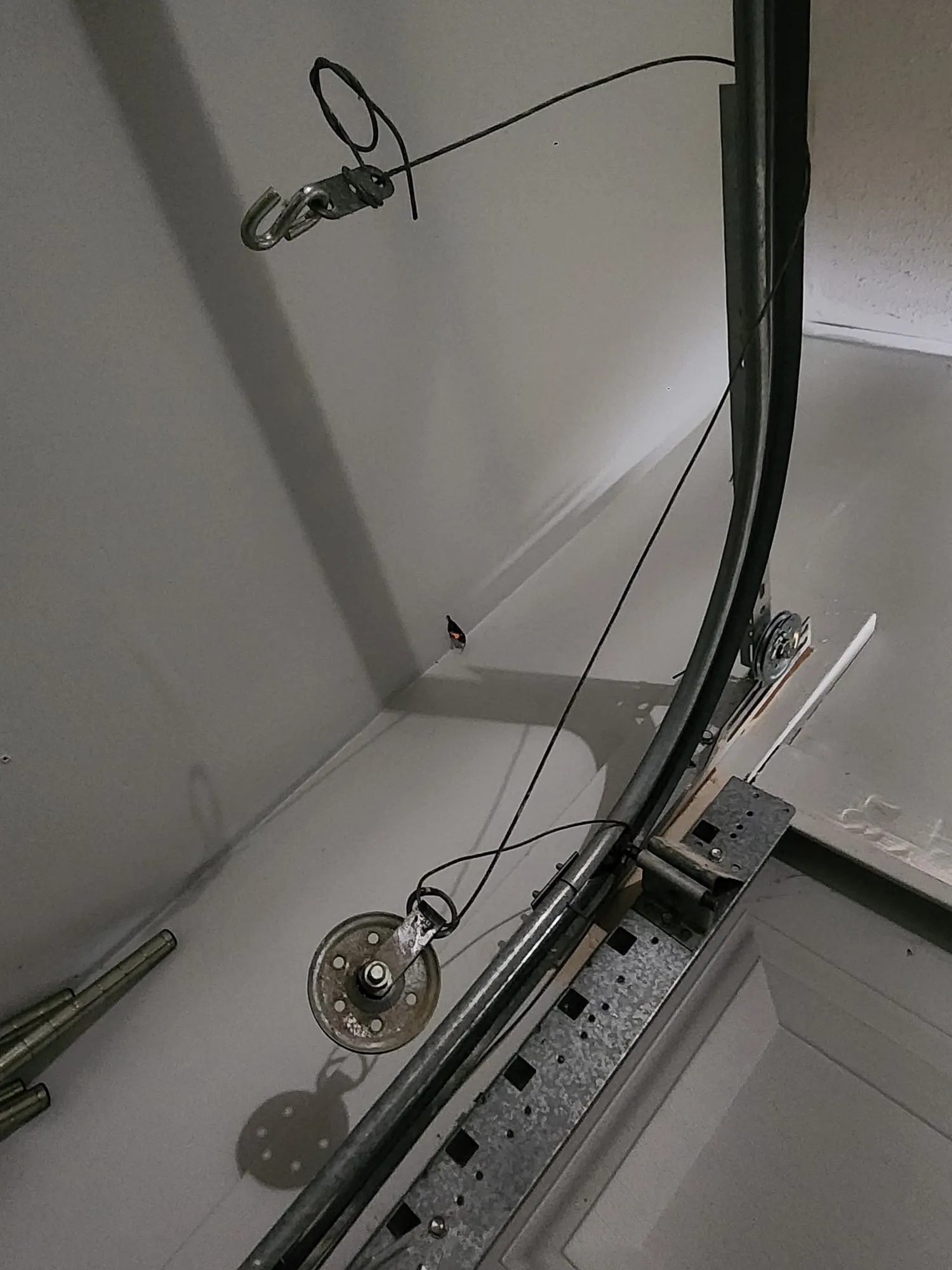
- Frayed lift cables. Clopay warns these can break and cause injury or damage.
- A gap in a torsion spring coil, or a door that fails the balance test.
- Rollers that wobble, crack or grind even after cleaning.
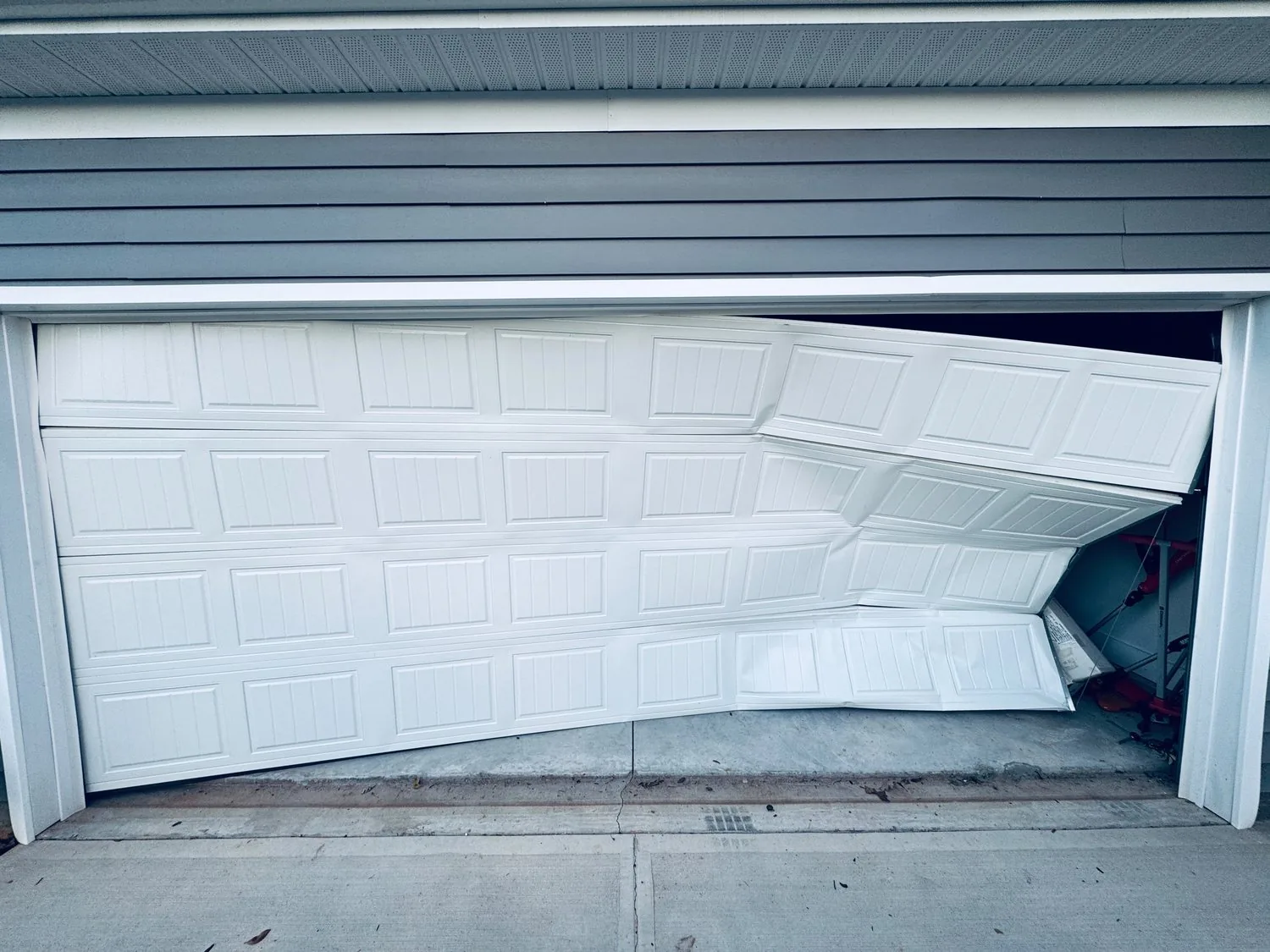
- A door that fails the reverse test.
A garage door tune-up covers the checks that need tools and training: spring balance, cable condition, roller wear, opener force and the safety reverse. We explain what we find and quote any repair before doing it.
Need it fixed?
Garage Door Tune-Up across Greenville and the Upstate
Upfront pricing, a 5.0-star Google rating and a Greenville crew that explains the fix first.
Frequently asked questions
What should I use to lubricate my garage door?
Clopay recommends a silicone-based garage door lubricant, not grease. Skip nylon and plastic rollers and keep lubricant out of the tracks.
How often should I wash my garage door?
Amarr suggests washing the exterior once a year with mild detergent and warm water. After a heavy pollen spring, a rinse and wipe-down is worth doing.
Can pollen affect my garage door sensors?
A film of dust or pollen on the lenses can interfere with the beam. Wipe them gently with a soft cloth and check that both sensor lights are steady.
How often should a technician service my door?
Once a year is DASMA's guidance for a professional inspection. The monthly checks in this guide fill the gaps between visits.